

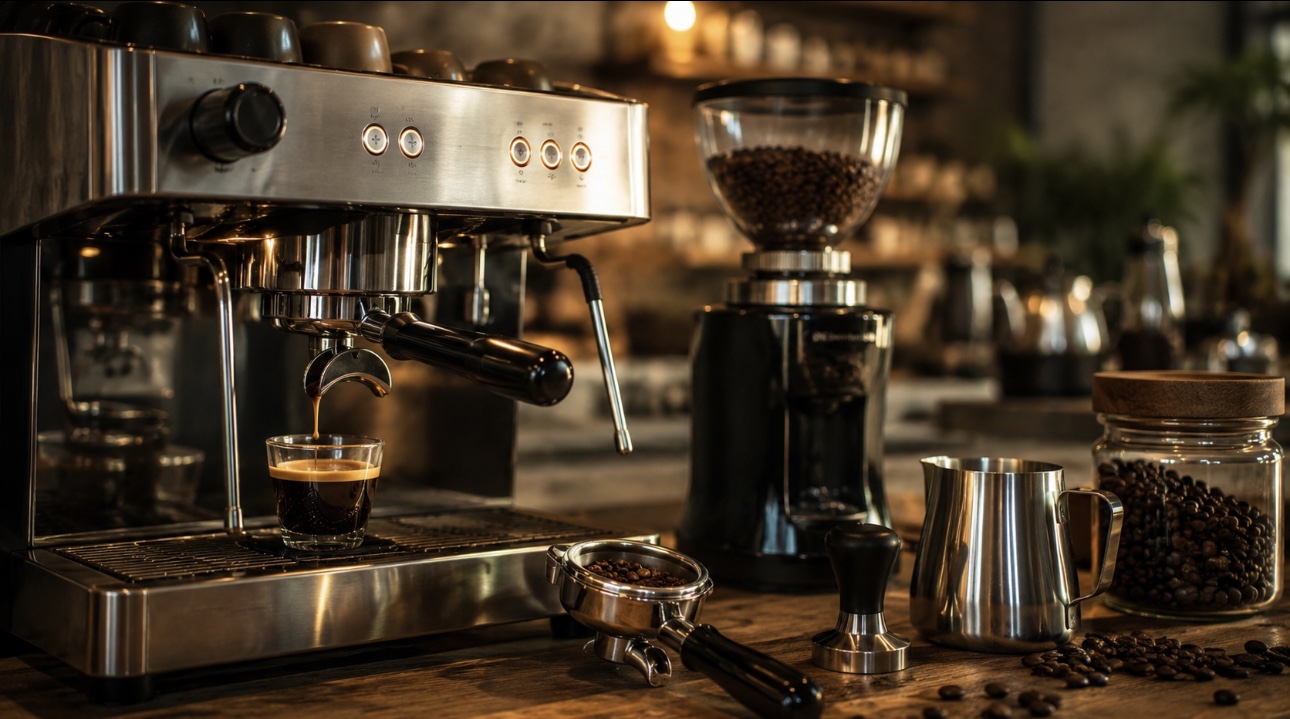
 Starting your coffee journey can feel overwhelming. With countless brewing methods, espresso techniques, and coffee tools to learn, it’s easy to wonder where to begin. That’s exactly why this Beginner Barista Guide was created—to help aspiring baristas and coffee enthusiasts build the right foundation from day one.
Whether you’re preparing for your first café job, building a home coffee station, or simply want to make consistently better coffee, this guide will help you understand the essential skills every beginner barista needs. You’ll learn about espresso extraction, grind size, coffee dosing, brew ratios, milk steaming, basic latte art, and common mistakes that can affect coffee quality.
I know that Great coffee doesn’t come from expensive equipment alone—it comes from understanding the fundamentals. Throughout this guide, you’ll learn practical techniques and real-world tips that you can apply immediately, whether you’re working behind a café bar or making coffee at home.
By the end of this Beginner Barista Guide, you’ll have a stronger understanding of coffee fundamentals, greater confidence behind the espresso machine, and the practical skills needed to continue developing your barista journey.
may hear terms like:
- Espresso extraction
- Grind size
- Dose
- Brew ratio
- Tamping
- Micro foam
- Latte art
- Dialing in
But becoming a skilled barista is not about memorising coffee terms. It is about understanding how different variables affect the final cup.
A professional barista learns to observe, adjust, and improve.
For example, when an espresso tastes sour, an experienced barista does not immediately change everything. They analyse the possible causes:
- Is the grind too coarse?
- Is the extraction too short?
- Is the coffee dose too high or too low?
- Is the coffee too fresh and still releasing too much CO2 ?
This ability to understand and solve problems is what separates a beginner from a professional.
This Beginner Barista Guide will take you through the essential skills needed to build a strong coffee foundation.
You will learn:
- What a barista actually does
- How coffee beans influence flavour
- Espresso preparation fundamentals
- How to steam milk correctly
- Essential equipment for beginners
- Common mistakes and how to avoid them
My Journey into Coffee
My journey into coffee started in 2017, and I did not start as a barista.
I started working as a waiter at a café called Black Water. At that time, I knew very little about coffee. I was familiar with regular coffee such as Nescafé, but I had never really been exposed to espresso-based coffee.
I had never heard of drinks like espresso, cappuccino, latte, or Americano, and I had never even seen a professional coffee machine before.
After about one and a half months, I got an opportunity to learn about coffee and work with the coffee machine. In the beginning, I didn’t know how to use the machine or how espresso was prepared. Everything was new to me.
But I saw it as an opportunity to learn.
Step by step, I started learning how the coffee machine works, how espresso is prepared, and how different coffee drinks are made. With practice and experience, I became more comfortable behind the machine and gradually developed a real interest in coffee.
After gaining experience there, I continued working in other cafés and kept developing my skills. My coffee journey eventually took me beyond my home country and into the international coffee industry.
I spent two years working in Oman, where I gained valuable experience and learned to work in a different environment. After that, I continued my journey in the UAE, where I have been working for around one and a half years.
Looking back, it is interesting to think that I started as a waiter who had never even seen a professional coffee machine. Today, coffee has become a major part of my professional journey.
My journey taught me that you don’t need to know everything when you start. You just need the opportunity to learn, the willingness to practice, and the patience to keep improving.
That is one of the reasons I created this Beginner Barista Guide — to help beginners understand the things I once had to learn from the beginning.
“This ability to understand and solve problems is what separates a beginner from a professional.”
Table of Contents
- What Is a Barista?
- Essential Skills Every Beginner Barista Needs
- Understanding Coffee Beans and Flavour
- Espresso Basics for Beginner Baristas
- Milk Steaming Techniques Explained
- Beginner Barista Equipment Guide
- Café Workflow: From order to service
- Common Beginner Barista Mistakes
- Barista Tips for Faster Improvement
- Frequently Asked Questions
- Conclusion
What Is a Barista?
 A barista is a coffee professional who prepares coffee beverages while understanding the science and techniques behind coffee preparation.
Many people think a barista simply makes coffee drinks, but professional baristas do much more.
A skilled barista understands:
- Coffee quality and freshness
- Espresso extraction
- Grinder adjustment
- Milk texture
- Brewing methods
- beginner Equipment maintenance
- Customer preferences
- Drink consistency
The goal is not only to make one good coffee.
The goal is to make the same quality coffee repeatedly.
The Difference Between Making Coffee and Being a Barista
 Anyone can follow a recipe and prepare a coffee.
A barista understands why the recipe works.
For example:
A beginner may taste espresso and say:
“This coffee tastes too bitter.”
A trained barista thinks:
- Was the extraction too long?
- Was the grind too fine?
- Was too much coffee used?
- Was the temperature too high?
This problem-solving approach is one of the most important skills in coffee.
Essential Skills Every Beginner Barista Needs
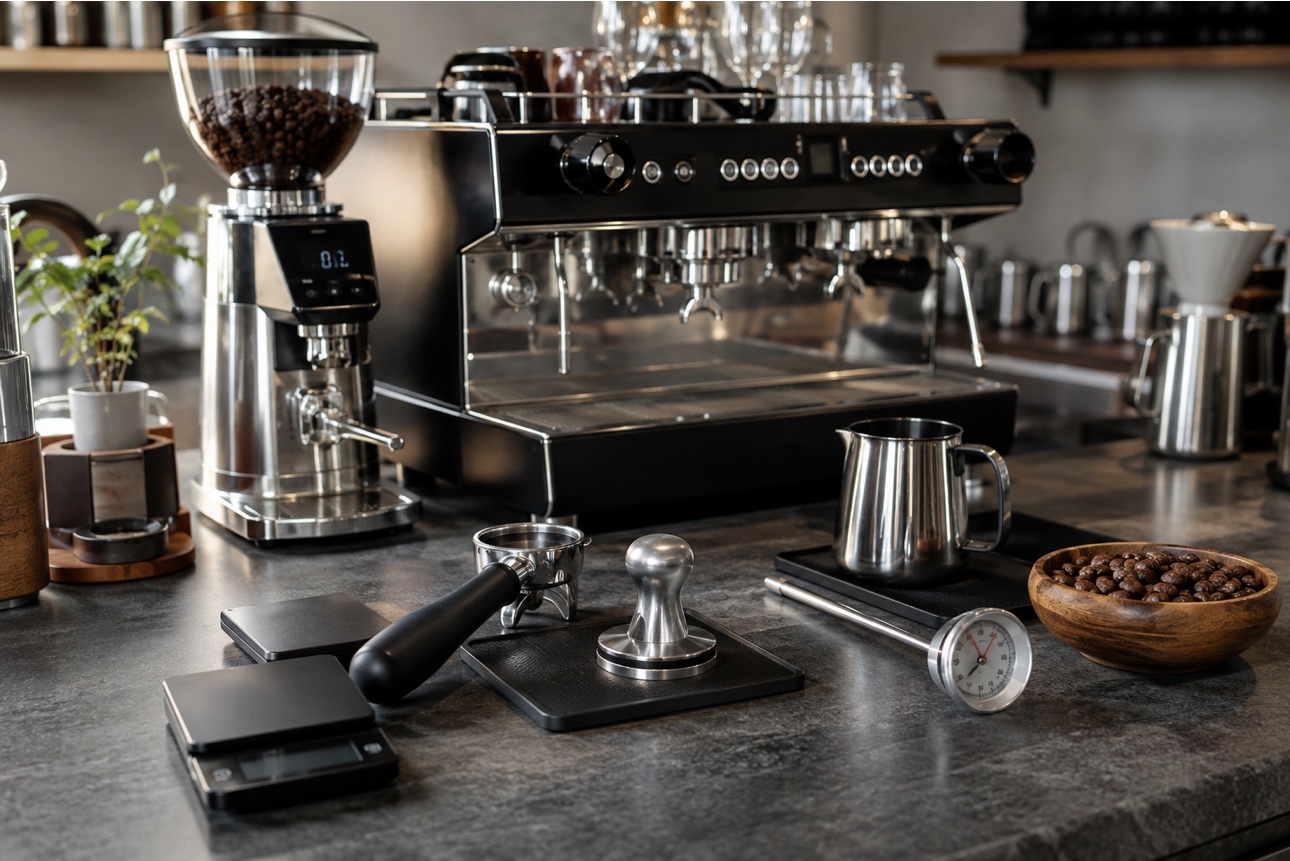 A strong barista foundation is built through several important skills.
1. Coffee Knowledge
Understanding coffee starts with the bean.
A barista should know:
- Where coffee comes from
- How processing affects flavour
- How roasting changes taste
- How freshness affects extraction
2. Grinder Skills
The grinder is one of the most important tools in a coffee bar.
Many beginners focus heavily on the espresso machine, but coffee quality depends greatly on grind consistency.
A good grinder controls:
- Particle size
- Extraction speed
- Flavour balance
A small grind adjustment can completely change the espresso result.
3. Espresso Preparation
 Espresso is the foundation of many café drinks.
A beginner barista should understand:
- Coffee dose
- Grind size
- Distribution
- Tamping
- Extraction time
- Espresso yield
4. Milk Steaming
Milk preparation is a major skill for drinks such as:
- Latte
- Flat white
- Cappuccino
The goal is not simply making hot milk.
The goal is creating smooth microfoam with the correct texture for each drink.
Understanding Coffee Beans and Flavor

Coffee flavor is influenced by several factors:
| Factor | Effect on Coffee |
|---|---|
| Origin | Creates different flavour characteristics |
| Variety | Influences sweetness and aroma |
| Processing | Changes flavour clarity and body |
| Roast Level | Affects taste balance |
| Freshness | Influences aroma and extraction |
Arabica vs Robusta Coffee
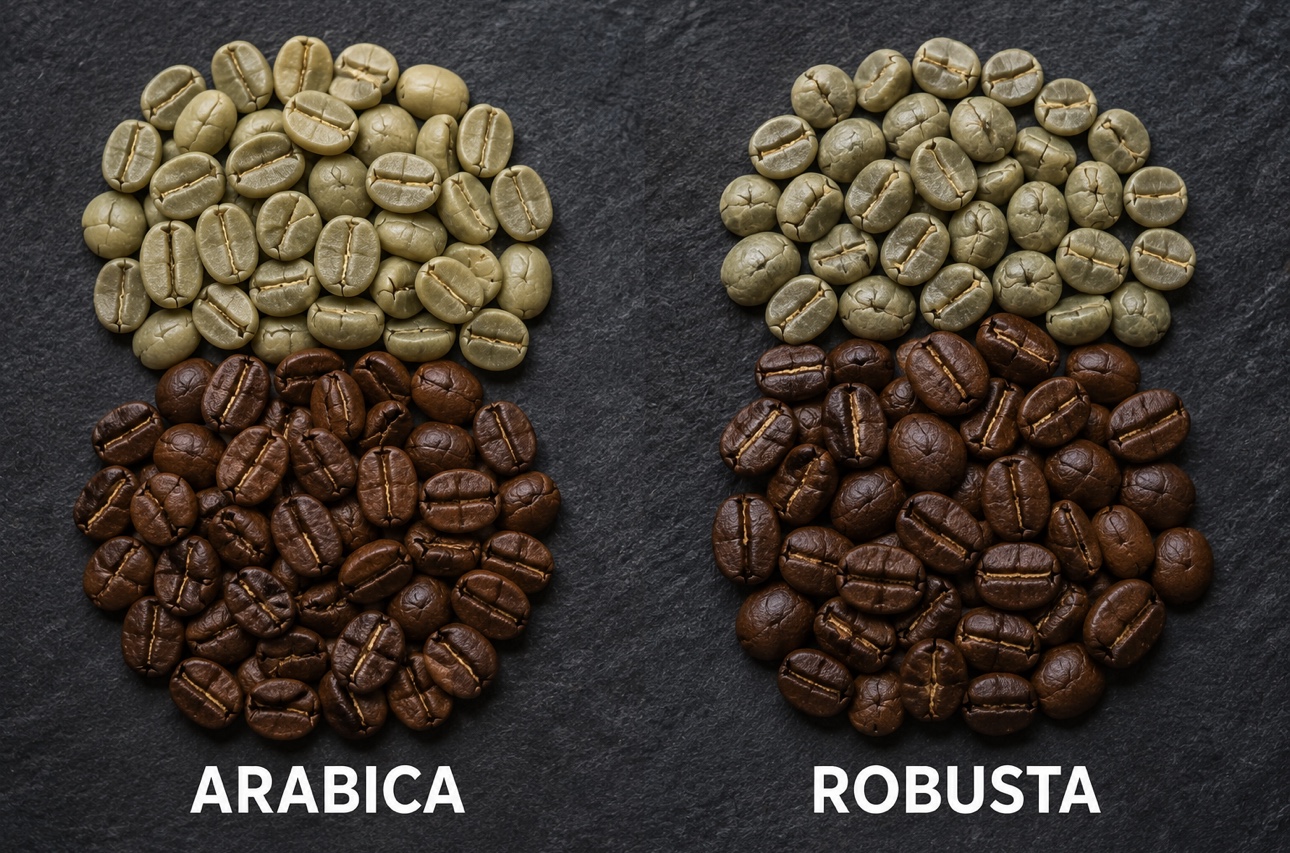
| Feature | Arabica | Robusta |
|---|---|---|
| Flavour | Complex and smooth | Strong and intense |
| Acidity | Usually higher | Usually lower |
| Caffeine | Lower | Higher |
| Body | Softer | Heavier |
| Common Use | Specialty coffee | Espresso blends |
Understanding Roast Levels
Light Roast
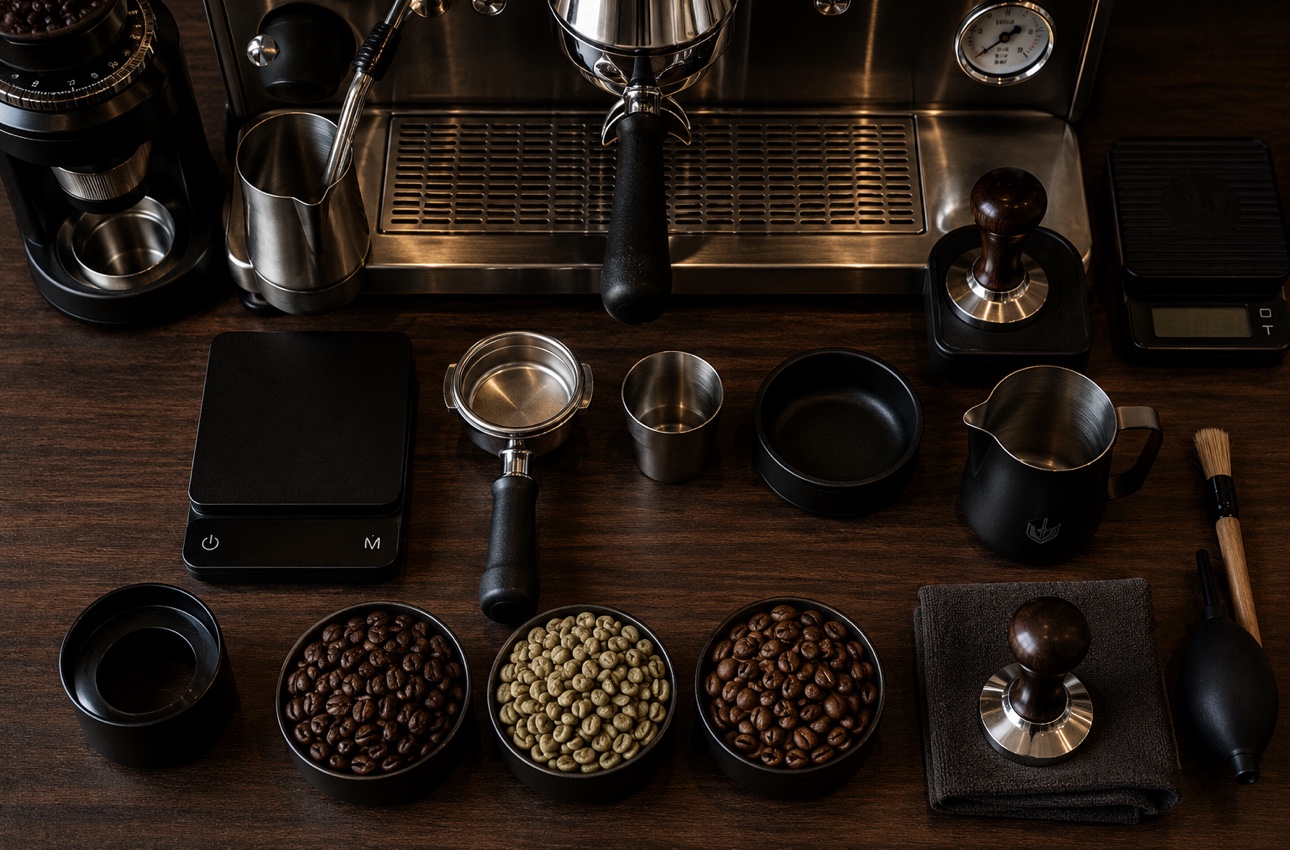 Common characteristics:
- Higher acidity
- More noticeable origin flavours
- Fruity or floral notes
Often used for:
- Filter coffee
- Specialty brewing
Medium Roast
Characteristics:
- Balanced sweetness
- Moderate acidity
- Good overall balance
Commonly used for:
- Espresso
- Milk-based drinks
Dark Roast
Characteristics:
- Strong roasted flavor
- Lower acidity
- Heavy body, bold, and smoky
Often used for:
- best foe espresso and milk based coffee.
Professional Tip: Learn to Taste Coffee
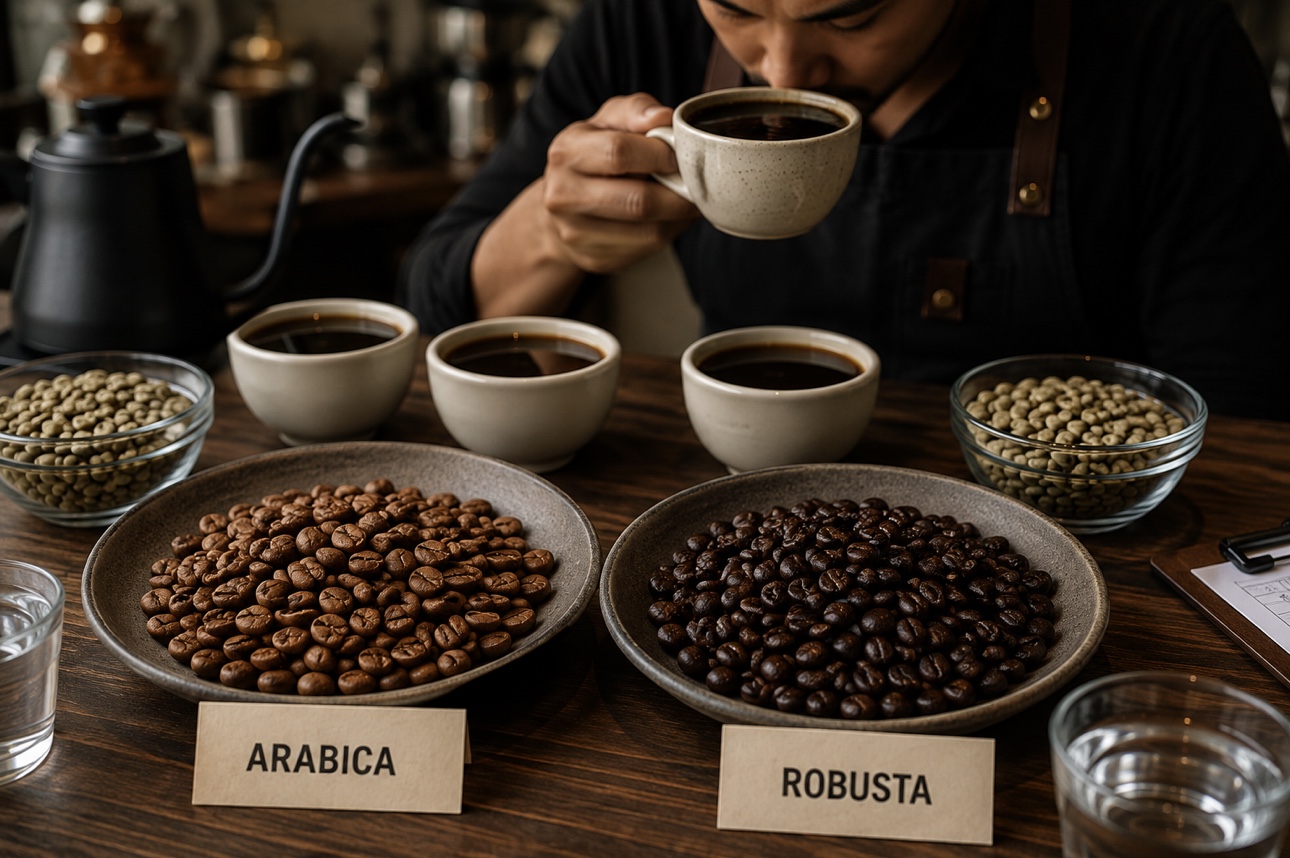 One of the biggest improvements a beginner barista can make is learning how to taste.
Instead of asking:
“Do I like this coffee?”
Ask:
- Is it sweet?
- Is it balanced?
- Is the acidity pleasant?
- Does it have a good body?
- Does the flavor remain after drinking?
Professional baristas improve because they taste, analyze, and adjust.
Espresso Basics Every Beginner Barista Should Understand
Espresso is the foundation of many popular coffee drinks, including:
- Latte
- Flat white
- Cappuccino
- Americano
- Mocha
- cortado
- piccolo
Learning espresso is one of the most important steps in becoming a skilled barista because many other coffee skills depend on understanding espresso quality.
A great espresso is not created by pressing a button. It is created by controlling several variables and understanding how they work together.
The main espresso variables are:
- Coffee dose
- Grind size
- Distribution
- Tamping
- Water temperature
- Extraction time
- Espresso yield
Understanding Espresso Dose
What Is Coffee Dose?
Dose means the amount of ground coffee used to prepare an espresso shot.
For example:
- 18 grams of ground coffee
- Producing around 36 grams of espresso
This is often called a 1:2 brew ratio.
Example:
| Coffee Dose | Espresso Output |
|---|---|
| 18g coffee | 36g espresso |
| 20g coffee | 40g espresso |
These numbers are a starting point, not a strict rule.
Different coffees may require different recipes depending on:
- Roast level
- Bean freshness
- Origin
- Equipment
Why Dose Consistency Matters
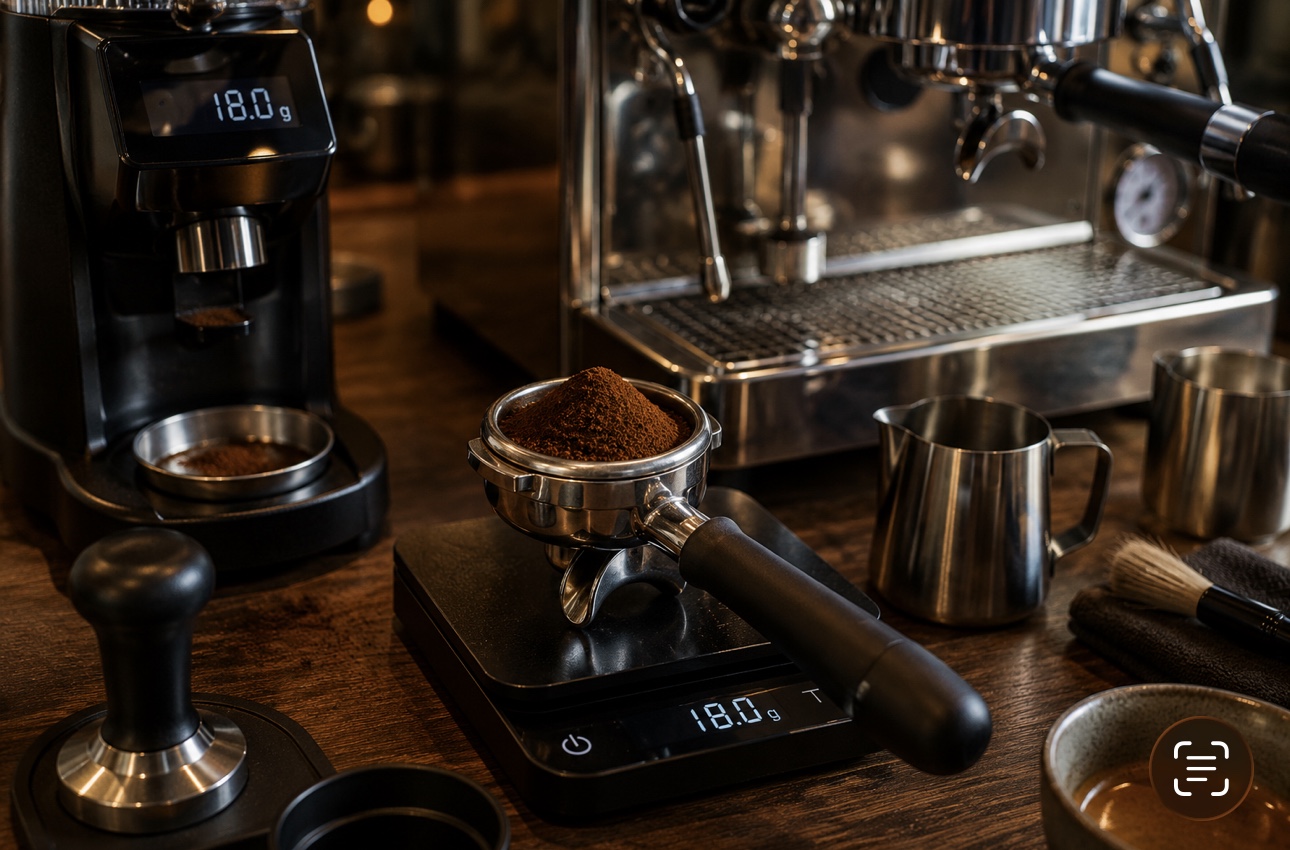 A common mistake beginners make is changing the coffee amount every time they prepare espresso.
Consistency is important because you need a stable starting point before making adjustments.
A professional workflow is:
- Keep the dose consistent
- Check the espresso result
- Adjust one variable
- Taste again
Changing multiple things together makes it difficult to understand what improved the coffee.
Understanding Grind Size
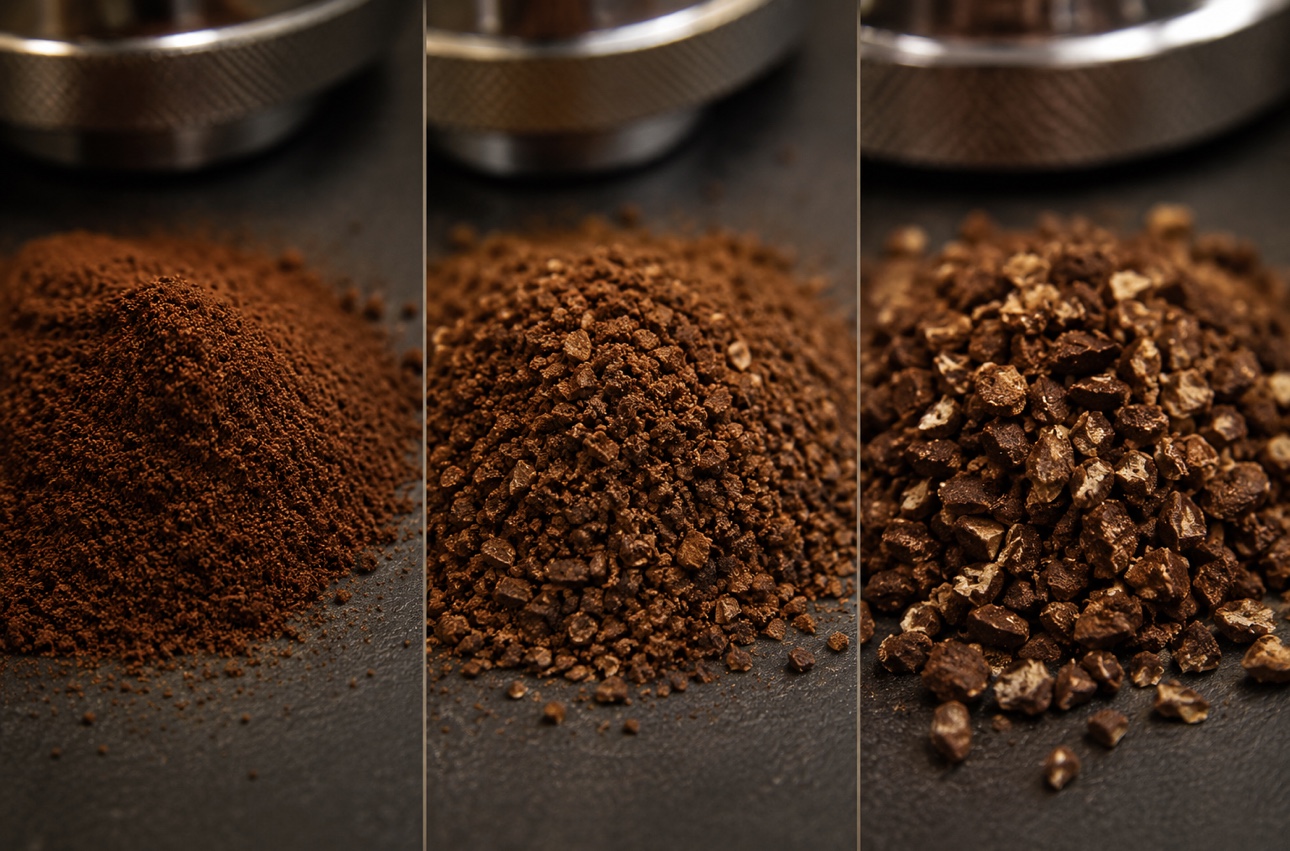 Grind size controls how quickly water moves through coffee.
It is one of the most important adjustments a barista makes.
Fine Grind
Water moves slower.
Possible result:
- Longer extraction
- Stronger flavour
- Possible bitterness
Coarse Grind
Water moves faster.
Possible result:
- Short extraction
- Weak flavour
- Sour or acidic taste
How Baristas Adjust Grind Size
During café service, baristas regularly check espresso because coffee changes naturally.
Factors that affect extraction include:
- Coffee freshness
- Humidity
- Temperature
- Bean age
A technique that works well during café service is adjusting only one variable at a time.
Usually, the grinder is the first adjustment.
Tamping Technique
Tamping creates an even coffee bed so water can pass through the coffee evenly.
The purpose of tamping is not to press as hard as possible.
The important factors are:
- Level surface
- Even pressure
- Straight tamp
Common Tamping Mistakes
Uneven Tamp
Problem:
Water finds easier paths through the coffee.
Result:
- Uneven extraction
- Weak flavour
- Channeling
Too Much Focus on Force
Many beginners think:
“Harder tamping means better espresso.”
However, consistency matters more than maximum pressure.
A straight and even tamp is more important.
Espresso Extraction Explained
Extraction is the process of using water to dissolve and flavor compounds from coffee.
During extraction, water collects:
- Acidity
- Sweetness
- Body
- Aroma compounds
The goal is balance.
Understanding Espresso Taste Problems
Espresso Tastes Sour
Possible causes:
| Problem | Solution |
|---|---|
| Grind too coarse | Grind finer |
| Extraction too short | Increase extraction time |
| Water flow too fast | Adjust grind finer |
Sour espresso often means the coffee was under-extracted.
Espresso Tastes Bitter
Possible causes:
| Problem | Solution |
|---|---|
| Grind too fine | Grind slightly coarser |
| Extraction too long | Reduce extraction time |
| Too much coffee extracted | Adjust recipe |
Bitter espresso often means the coffee has been over-extracted.
Espresso Has Weak Flavor
Possible causes:
- Incorrect dose
- Poor coffee freshness
- Uneven distribution
- Incorrect grind setting
The Espresso Dialing-In Process
Dialing in means adjusting coffee variables until the espresso reaches the desired flavor.
A professional barista normally follows a process:
Step 1: Start With a Recipe
Example:
- Dose: 18g
- Yield: 36g
- Time: 25–30 seconds
Step 2: Taste The Espresso
Evaluate:
- Sweetness
- Acidity
- Bitterness
- Body
Step 3: Adjust One Variable
Examples:
If espresso is sour:
→ Grind finer
If espresso is bitter:
→ Grind slightly coarser
Step 4: Repeat Until Balanced
Good espresso requires patience and consistency.
Professional Café Workflow: How Baristas Maintain Consistency
During busy café service, speed is important, but consistency is more important.
A professional workflow usually includes:
- Checking grinder settings
- Preparing a clean portafilter
- Dosing accurately
- Distributing coffee evenly
- Tamping correctly
- Checking extraction
- Cleaning equipment after use
[ For example, during a busy cafe shift, I keep the grinder setting and espresso recipe consistent, check the shot as it runs, and make small adjustment when needed so every customer receives the same quality in every cup.
Espresso Equipment Basics
A beginner does not need the most expensive equipment to learn.
The important thing is understanding how each tool affects coffee quality.
Essential Espresso Tools
| Equipment | Purpose |
|---|---|
| Coffee grinder | Controls grind consistency |
| Espresso machine | Produces espresso |
| Scale | Measures dose and output |
| Tamper | Creates even coffee bed |
| Milk pitcher | Controls milk texture |
| Cleaning tools | Maintain equipment |
Beginner Equipment Advice
Many beginners spend too much money on an espresso machine and ignore the grinder.
A consistent grinder can improve coffee quality significantly because extraction depends heavily on particle size.
A practical beginner setup should focus on:
- Good grinder
- Fresh coffee beans
- Accurate scale
- Reliable espresso machine
- Proper cleaning routine
Cleaning: A Professional Habit
Cleaning is not optional.
Coffee oils build up over time and affect flavour.
A good barista regularly:
- Purges the steam wand
- Cleans the group head
- Backflushes the espresso machine when required
- Keeps the portafilter clean
- Maintains grinder cleanliness
Clean equipment produces better coffee and improves consistency.
Milk Steaming Guide: Creating Professional Coffee Texture
Milk steaming is one of the most important skills a beginner barista needs to develop.
Many beginners think good milk is simply hot milk with foam on top. Professional baristas understand that milk texture changes the entire coffee experience.
The goal of steaming milk is to create:
- Smooth microfoam
- Balanced sweetness
- Correct temperature
- A texture that matches the drink
A well-steamed milk should combine with espresso naturally instead of sitting separately.
Understanding Milk Texture
When steaming milk, two main processes happen:
1. Air Introduction (Stretching)
This is when the steam wand introduces air into the milk.
The amount of air determines the final texture.
More air creates:
- More foam
- Lighter texture
Less air creates:
- Smoother texture
- Thinner microfoam
2. Texturing and Vortex Creation
After adding the correct amount of air, the goal is to create a smooth spinning motion.
This vortex:
- Breaks larger bubbles
- Creates fine microfoam
- Produces a glossy milk texture
A common mistake I see beginners make is adding air continuously throughout steaming. This usually creates large bubbles and dry foam instead of smooth microfoam.
Milk Temperature: Why It Matters
 Temperature control is important because milk changes as it heats.
The ideal range for many espresso-based drinks is around:
55°C–65°C
Within this range:
- Milk sweetness is noticeable
- Texture remains smooth
- The flavour of espresso is not overwhelmed
If milk becomes too hot:
- Natural sweetness decreases
- Texture can become less pleasant
- Coffee balance changes
[Insert Your Professional Tip]
(Add your personal explanation about how you judge milk temperature during café service.)
Pitcher Position and Steam Wand Technique
A correct pitcher position helps create consistent texture.
A useful starting position:
- Tilt the pitcher slightly
- Keep the steam wand near the surface when introducing air
- Move deeper into the milk to create the vortex
- Maintain a smooth circular movement
A pitcher angle of around 45 degrees can help create the spinning motion needed for even milk texture.
Different Milk Textures for Different Drinks
Professional baristas do not steam all milk the same way.
Different drinks require different textures.
Flat White Milk Steaming Technique
A flat white requires a smooth, fine microfoam with a thinner texture.
The goal:
- Strong espresso connection
- Silky milk texture
- Minimal foam separation
A common technique:
- Introduce a small amount of air at the beginning
- Avoid adding excessive foam
- Focus on creating a smooth vortex
Professional Technique Placeholder
[Insert Your Flat White Steaming Experience]
Example points to include:
- Around 2–3 seconds of air introduction
- Smooth rolling motion afterward
- Creating a glossy milk texture
Latte Milk Steaming Technique
A latte requires slightly more air than a flat white.
The goal:
- Smooth texture
- Enough foam for latte art
- Balanced milk sweetness
Typical approach:
- Add slightly more air during the beginning stage
- Stop adding air once enough texture is created
- Continue creating the milk vortex
Professional Technique Placeholder
[Insert Your Latte Steaming Experience]
Example points to include:
- Around 3–5 seconds air introduction
- Maintaining smooth microfoam
- Preparing milk suitable for pouring latte art
Cappuccino Milk Steaming Technique
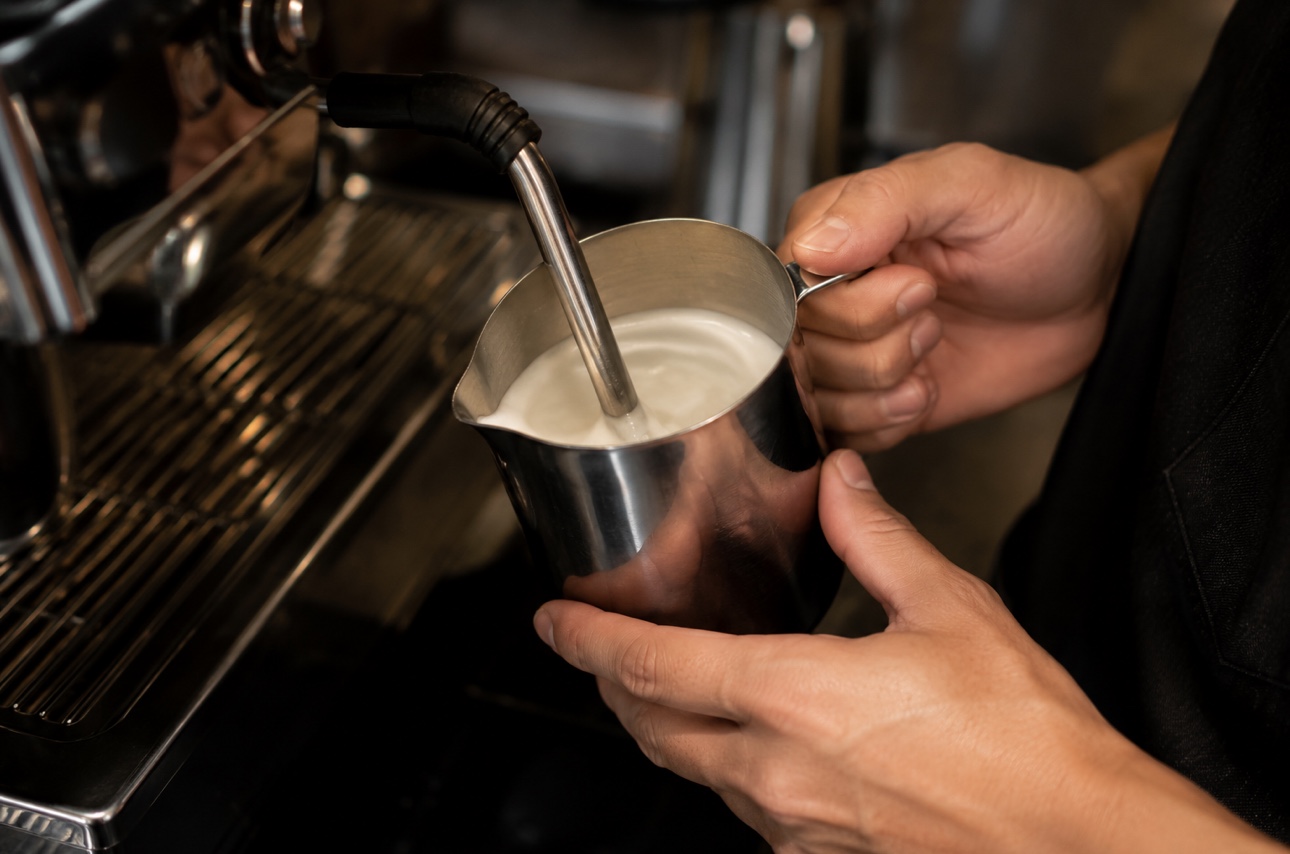 A cappuccino traditionally requires a more noticeable foam structure.
The goal:
- More volume
- Stronger foam presence
- Creamy texture
Typical approach:
- Introduce more air compared with latte or flat white
- Create a thicker texture
- Maintain smooth foam quality
Professional Technique Placeholder
[Insert Your Cappuccino Steaming Experience]
Example points to include:
- Around 3–7 seconds air introduction
- Building more foam structure
- Keeping bubbles fine rather than large
Latte Art Basics
Latte art is not only about creating beautiful designs.
Good latte art depends on:
- Correct milk texture
- Proper espresso preparation
- Controlled pouring technique
The foundation comes before the design.
If milk texture is incorrect, even good pouring technique will not create a clean result.
Common Milk Steaming Mistakes
Mistake 1: Adding Too Much Air
Problem:
Large bubbles and dry foam.
Solution:
Control the stretching stage and focus on microfoam.
Mistake 2: Heating Milk Too Much
Problem:
Milk loses sweetness and texture quality.
Solution:
Control temperature and avoid overheating.
Mistake 3: Not Creating a Vortex
Problem:
Foam separates from liquid milk.
Solution:
Position the steam wand correctly and create a smooth spinning movement.
Mistake 4: Not Cleaning the Steam Wand
Problem:
Old milk residue affects hygiene and equipment performance.
Solution:
Always:
- Purge steam wand immediately
- Wipe with a clean damp cloth
- Keep equipment ready for the next drink
Beginner Barista Equipment Guide
Choosing equipment can be confusing because there are many options available.
A beginner should focus on learning skills before buying unnecessary equipment.
Essential Equipment for Beginners
| Equipment | Why It Matters |
|---|---|
| Coffee grinder | Controls extraction quality |
| Espresso machine | Produces espresso |
| Digital scale | Improves accuracy |
| Tamper | Creates even coffee bed |
| Milk pitcher | Controls milk texture |
| Knock box | Improves workflow |
| Cleaning tools | Maintains quality |
What Should Beginners Invest In First?
A practical priority order:
1. Coffee Grinder
A good grinder improves consistency.
Even an excellent espresso machine cannot compensate for poor grinding.
2. Fresh Coffee Beans
Fresh beans help develop:
- Better aroma
- Better flavour
- More consistent extraction
3. Basic Measuring Tools
A scale helps you understand:
- Coffee dose
- Espresso output
- Brewing consistency
4. Espresso Machine
Choose based on:
- Your skill level
- Budget
- Learning goals
Avoid buying equipment only because it looks professional.
Understanding the process is more important than owning expensive equipment.
Professional Café Workflow: Habits That Improve Barista Skills
Professional baristas build consistency through routine.
A good workflow includes:
Before Service
- Check equipment
- Prepare coffee station
- Adjust grinder
- Test espresso quality
During Service
- Maintain clean workflow
- Monitor coffee quality
- Communicate clearly
- Prepare drinks consistently
After Service
- Clean equipment
- Maintain grinder
- Prepare station for next use
Professional Barista Tips For Faster Improvement
1. Taste More Coffee
Your palate improves through practice.
Taste:
- Different origins
- Different roast levels
- Different brewing methods
2. Change One Variable At A Time
When something goes wrong:
Do not change everything.
Example:
If espresso is too fast:
First adjust grind size.
Do not immediately change:
- Dose
- Temperature
- Coffee amount
- Machine settings
3. Focus On Consistency Before Speed
Speed comes naturally with repetition.
A professional barista first develops:
- Accuracy
- Clean workflow
- Repeatable technique
4. Learn From Mistakes
Every barista improves through practice.
Common learning areas:
- Espresso adjustment
- Milk texture
- Workflow organisation
- Customer feedback
[Insert Your Real Barista Experience]
(Add a short story about a mistake that helped you improve as a barista.)
Common Beginner Barista Mistakes (And How To Improve Them)
Learning coffee takes practice. Most skilled baristas made the same mistakes when they were beginners.
The important thing is understanding why the mistake happens and how to correct it.
Mistake 1: Focusing Only on Latte Art
Many beginners start with latte art because it looks impressive.
However, good latte art depends on:
- Correct espresso
- Proper milk texture
- Good pouring control
A beautiful pattern cannot fix poorly extracted espresso or incorrect milk texture.
Better Approach:
Build skills in this order:
- Coffee knowledge
- Espresso preparation
- Milk steaming
- Pouring technique
- Latte art designs
Mistake 2: Changing Too Many Espresso Variables
A common beginner mistake is changing everything when coffee does not taste right.
For example:
Changing:
- Grind size
- Dose
- Temperature
- Coffee amount
all at the same time.
The problem:
You do not know which change improved or damaged the result.
Professional Approach:
Change one variable at a time.
Example:
If espresso flows too quickly:
First adjust:
→ Grind finer
Then test again.
Mistake 3: Ignoring Coffee Freshness
Coffee is a natural product.
As coffee ages, it changes.
Older coffee may create:
- Less aroma
- Less crema
- Different extraction behaviour
A beginner barista should understand that coffee recipes may need adjustment depending on bean freshness.
Mistake 4: Poor Grinder Maintenance
The grinder directly affects coffee consistency.
Common issues:
- Old coffee particles inside grinder
- Incorrect grind settings
- Dirty burrs
A clean and maintained grinder helps produce better espresso.
Mistake 5: Incorrect Milk Steaming
Common beginner problems:
Too Much Air
Result:
- Large bubbles
- Dry foam
Solution:
Control the stretching stage.
Milk Too Hot
Result:
- Reduced sweetness
- Poor texture
Solution:
Monitor temperature and learn the correct stopping point.
No Milk Vortex
Result:
- Foam separates
- Uneven texture
Solution:
Position the steam wand correctly and create a smooth rolling motion.
Mistake 6: Not Cleaning Equipment Properly
Professional coffee quality depends on cleanliness.
Coffee oils and milk residue can affect:
- Taste
- Hygiene
- Equipment performance
A professional routine includes:
Daily:
- Clean portafilter
- Purge steam wand
- Wipe equipment
Regularly:
- Clean grinder components
- Maintain espresso machine
Beginner Barista Learning Roadmap
A structured learning plan helps beginners improve faster.
Stage 1: Learn Coffee Fundamentals
Focus on:
- Coffee origins
- Roast levels
- Flavour differences
- Freshness
Goal:
Understand what affects coffee taste.
Stage 2: Learn Espresso Skills
Practice:
- Dosing
- Grinding
- Tamping
- Extraction
- Dialing in
Goal:
Produce balanced espresso consistently.
Stage 3: Learn Milk Skills
Practice:
- Steam wand control
- Air introduction
- Microfoam creation
- Pouring technique
Goal:
Create smooth milk texture.
Stage 4: Develop Professional Workflow
Learn:
- Speed
- Organisation
- Cleaning habits
- Customer communication
Goal:
Work efficiently while maintaining quality.
Frequently Asked Questions (FAQ)
1. What should a beginner barista learn first?
A beginner barista should start with coffee fundamentals, espresso basics, grinder adjustment, and milk steaming. Understanding the reason behind each step is more important than memorising recipes.
2. How long does it take to become a barista?
The learning time depends on practice, training, and exposure. Basic skills can be learned relatively quickly, but developing consistency and professional judgement takes continuous practice.
3. Can I become a barista without experience?
Yes. Many professional baristas start as beginners. Learning coffee theory, practising regularly, and understanding espresso and milk techniques can build a strong foundation.
4. What are the most important skills for a beginner barista?
The most important skills are:
- Espresso preparation
- Grinder adjustment
- Milk steaming
- Cleaning routine
- Consistency
5. What equipment does a beginner barista need?
A beginner setup usually includes:
- Good coffee grinder
- Espresso machine
- Digital scale
- Tamper
- Milk pitcher
- Cleaning tools
6. Why does my espresso taste sour?
Sour espresso is often caused by under-extraction.
Possible reasons:
- Grind too coarse
- Extraction time too short
- Incorrect recipe
Try adjusting grind size and checking extraction time.
7. Why does my espresso taste bitter?
Bitter espresso is often related to over-extraction.
Possible causes:
- Grind too fine
- Extraction too long
- Too much coffee extracted
Adjust one variable at a time.
8. What temperature should milk be for coffee?
Many baristas aim for around 55°C–65°C depending on the drink style and preference.
This range helps maintain milk sweetness and smooth texture.
9. What is the difference between flat white, latte, and cappuccino?
| Drink | Milk Texture | Foam Level |
|---|---|---|
| Flat White | Thin, smooth microfoam | Low |
| Latte | Silky microfoam | Medium |
| Cappuccino | More textured foam | Higher |
10. Can I learn barista skills at home?
Yes. Home practice can help develop:
- Coffee knowledge
- Grinding skills
- Espresso understanding
- Milk steaming ability
Consistent practice is the key.
Conclusion
 Becoming a confident barista doesn’t happen in one day. It comes from learning the fundamentals, practicing the right techniques, making mistakes, and improving with every cup you prepare. This Beginner Barista Guide is designed to give you a strong starting point—from understanding coffee beans and grind size to dialing in espresso, steaming milk, preparing basic drinks, and working confidently in a real café environment. As you continue practicing, remember that consistency is more important than perfection. Taste your coffee, pay attention to what changes, and learn how each adjustment affects the final cup. These small habits are what gradually turn basic knowledge into real barista skills. Most importantly, enjoy the process. Every espresso you dial in, every milk texture you improve, and every drink you serve is part of your journey.