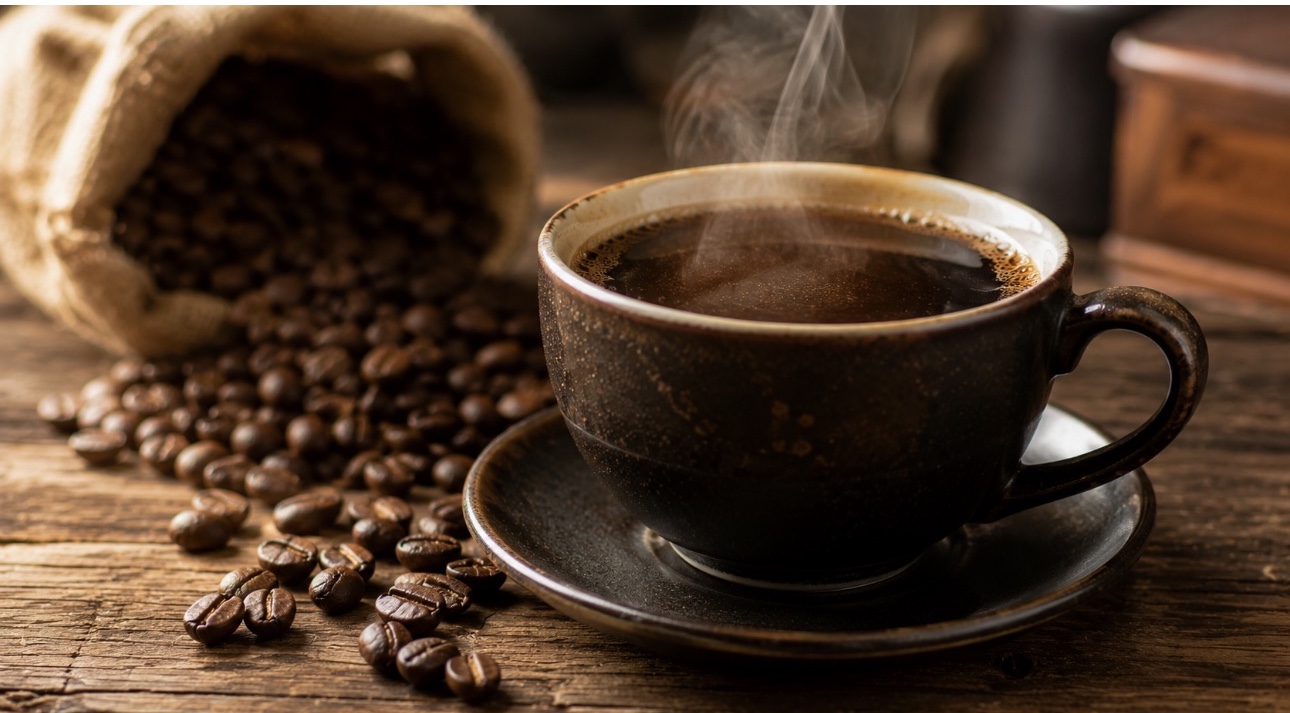
How to Brew Coffee: 9 Easy Brewing Methods for Beginners (2026 Guide)
Learning how to brew coffee is one of the best investments you can make if you want to enjoy consistently better coffee at home. While many people focus on buying expensive coffee beans or brewing equipment, the truth is that great coffee comes from understanding the brewing process. Even the highest-quality beans can produce an average cup if the grind size, water temperature, brewing ratio, or extraction time is incorrect. Learning how to brew coffee correctly starts with understanding these essential brewing fundamentals. Each coffee brewing method offers a unique experience.
Espresso delivers a rich and concentrated shot, a French Press creates a full-bodied cup, a V60 highlights delicate flavors and aromas, while Cold Brew produces a smooth, naturally sweet coffee with lower acidity. Understanding how these methods work will help you choose the one that best matches your taste, routine, this guide will show you how to brew coffee with confidence help you make cafe quality coffee at home.
In this complete coffee brewing guide, you’ll learn 9 popular coffee brewing methods, the equipment required for each, recommended grind sizes, coffee-to-water ratios, brewing times, and practical techniques used by professional baristas. Whether you’re brewing your first cup or improving your daily coffee routine, this guide will give you the knowledge and confidence to make café-quality coffee at home.
My Experience as a Barista
As a professional barista, I’ve learned that great coffee isn’t about expensive equipment—it’s about mastering the fundamentals. Small adjustments to your grind size, brewing ratio, water temperature, or pouring technique can completely transform the flavor of your coffee. Throughout this guide, I’ll share not only the how to brew coffee practical tips and common mistakes I’ve seen in real café environments, so you can brew with more confidence and consistency.
Table of Contents
What Is Coffee Brewing?
Why Brewing Method Matters
Espresso Method
French Press Method
Pour-Over Method (V60)
Chemex Method
AeroPress Method
Siphon (Vacuum) Method
Moka Pot Method
Cold Brew Method
Drip Coffee Machine
How to Choose the Best Brewing Method
Expert Coffee Brewing Tips
FAQ
Final Thoughts
What Is Coffee Brewing?
Before you learn how to brew coffee, it’s important to understand what coffee brewing actually means. Coffee brewing is the process of using water to extract the flavors, aromas, and natural oils from ground coffee beans. While it may seem simple, the way you brew coffee has a significant impact on its taste, aroma, body, and overall quality.
Every brewing method extracts coffee differently. Factors such as grind size, water temperature, coffee-to-water ratio, brewing time, and extraction all work together to shape the final cup. Even when using the same coffee beans, small changes to these variables can create completely different flavor profiles.
For example, espresso uses high pressure to produce a rich and concentrated shot with a creamy body. A French Press fully immerses the coffee grounds in water, creating a bold and full-bodied cup. V60 pour-over brewing highlights clarity, sweetness, and delicate aromas, while Cold Brew uses a long, slow extraction to produce a naturally smooth and low-acid coffee.
Understanding these coffee brewing fundamentals is the first step toward learning how to brew coffee with confidence. Once you know how different brewing methods affect flavor, you’ll be able to choose the right method, improve your brewing technique, and consistently brew better coffee at home.
Why Brewing Method Matters
If you’re learning how to brew coffee, it’s important to understand that the brewing method you choose is just as important as the coffee beans themselves. Even when using the same beans, different coffee brewing methods can produce completely different flavors, aromas, and textures because each method extracts coffee in a unique way.
A great cup of coffee is created by balancing several key brewing variables. Small changes to your grind size, water temperature, brewing time, or coffee-to-water ratio can dramatically affect the final taste. That’s why professional baristas focus on controlling the brewing process rather than relying only on high-quality coffee beans.
Key Factors That Affect Coffee Flavor
* Grind Size – Determines how quickly water extracts flavor from the coffee. A grind that’s too fine may produce a bitter cup, while a grind that’s too coarse can result in weak or sour coffee.
* Water Temperature – The ideal brewing temperature is 90–96°C (195–205°F). Water that’s too hot can over-extract the coffee, while cooler water may leave the coffee under-extracted.
* Brew Time – Every brewing method has an ideal extraction time. Brewing for too long often creates bitterness, while brewing for too little time can leave the coffee tasting flat or sour.
* Coffee-to-Water Ratio – Using the correct ratio helps create a balanced cup. Too much coffee can make the drink overly strong, while too little coffee may produce a watery taste.
* Brewing Pressure – Espresso uses high pressure to create a concentrated and full-bodied coffee, while methods like the French Press, V60, and Chemex rely on immersion or gravity to extract flavor more gently.
Many beginners assume that buying better coffee beans will automatically improve their coffee. In reality, learning how to brew coffee correctly often has a greater impact. Once you understand these brewing fundamentals, you’ll be able to adjust your technique, troubleshoot common brewing problems, and consistently brew better coffee at home.
4. Brewing Device: Choose According to Your Coffee Style
Your brewing equipment has a major influence on the taste, texture, and overall experience of your coffee.
Popular beginner-friendly brewing methods include:
V60 Pour Over
Produces a clean and bright cup with clear flavor notes.
French Press
Creates a full-bodied coffee with rich texture.
AeroPress
A versatile method that is quick, portable, and beginner-friendly.
Chemex
Known for producing a smooth and clean cup profile.
Moka Pot
Creates a strong coffee with an espresso-like character.
Choosing the right brewing method depends on your preferred taste, available time, and brewing style.
⸻ 5. Fresh Coffee Beans: The Starting Point of Great Flavor
Even with excellent equipment, poor-quality or stale coffee beans will limit your results.
Fresh coffee beans provide better:
* Aroma
* Sweetness
* Flavor complexity
* Overall freshness
For better results:
* Buy freshly roasted beans
* Store them properly
* Grind immediately before brewing
Fresh beans combined with proper brewing techniques can completely change your coffee experience.
⸻ 6. Quality Water: The Hidden Ingredient
Coffee is mostly water, which means water quality has a significant impact on the final taste.
Water does not simply carry coffee flavor; it helps extract different compounds from the coffee grounds. The mineral balance in water can influence sweetness, acidity, clarity, and overall flavor.
In specialty coffee, baristas pay attention to water chemistry, including minerals such as calcium and magnesium, because they affect how efficiently coffee flavors are extracted.
For better brewing:
* Use clean water
* Avoid strong odors or unusual tastes
* Maintain balanced mineral content
* Avoid extremely hard or completely mineral-free water
Poor-quality water can make coffee taste flat, bitter, or unpleasant, even when using high-quality beans and equipment.
When a coffee recipe does not produce the expected flavor, many people immediately change the beans or grind size. However, water quality is often an overlooked factor that can make a major difference.
⸻ 7. Timer: Control Your Brewing Process
A timer helps you understand and control your brewing time, especially with manual brewing methods.
Tracking brew time helps you identify problems such as:
* Under-extraction (sour and weak flavors)
* Over-extraction (bitter and dry flavors)
As you gain experience, timing becomes an important tool for improving your brewing skills and creating more consistent results.
⸻ Beginner Barista Tip
If you are starting your coffee brewing journey, don’t feel pressured to buy every piece of equipment immediately.
Focus on the basics first:
A good grinder + coffee scale + fresh coffee beans + quality water
These four essentials will create the biggest improvement in your coffee quality and help you build a strong foundation for learning different coffee brewing methods.
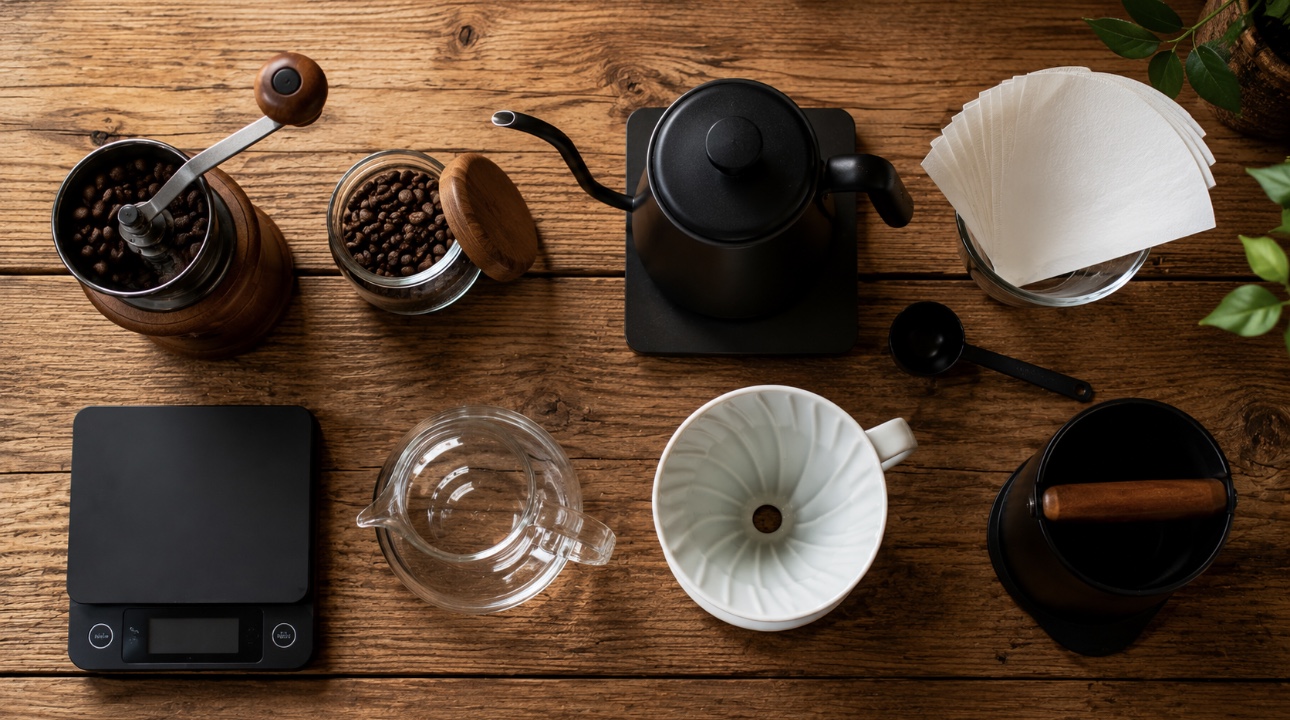
Essential Coffee Brewing Equipment for Beginners
Making great coffee at home does not always require expensive tools. However, having the right coffee brewing equipment can help you create a more consistent and enjoyable cup.
For beginners, starting with a few essential tools is the best approach. Understanding how each tool works will help you improve your brewing skills and make better coffee over time.
Coffee Grinder: The Foundation of Better Coffee
A coffee grinder is one of the most important tools for brewing fresh and flavorful coffee. Grinding coffee just before brewing helps preserve its aroma and taste.
A consistent grind size helps water extract the right flavors from coffee grounds. Different brewing methods require different grind sizes:
* Fine grind – Used for espresso
* Medium grind – Suitable for pour-over methods like V60
* Coarse grind – Best for French Press
A good grinder helps create more balanced coffee because consistent particles allow better extraction.
Coffee Scale: The Key to Consistency
A coffee scale helps you measure the exact amount of coffee and water used in your recipe.
Using accurate measurements helps control:
* Coffee strength
* Flavor balance
* Brewing consistency
For beginners, a simple coffee scale is one of the easiest ways to understand coffee-to-water ratios and improve brewing results.
Coffee Brewing Device: Choose the Right Method
Your brewing device depends on the type of coffee experience you enjoy.
Popular beginner-friendly brewing methods include:
* V60 – Creates a clean and bright cup
* French Press – Produces a rich and full-bodied coffee
*AeroPress – Offers a quick and versatile brewing experience
* Chemex – Makes a smooth and clean cup
Choosing one brewing method first helps beginners understand coffee flavor and brewing techniques better.
Gooseneck Kettle: Better Pour Control
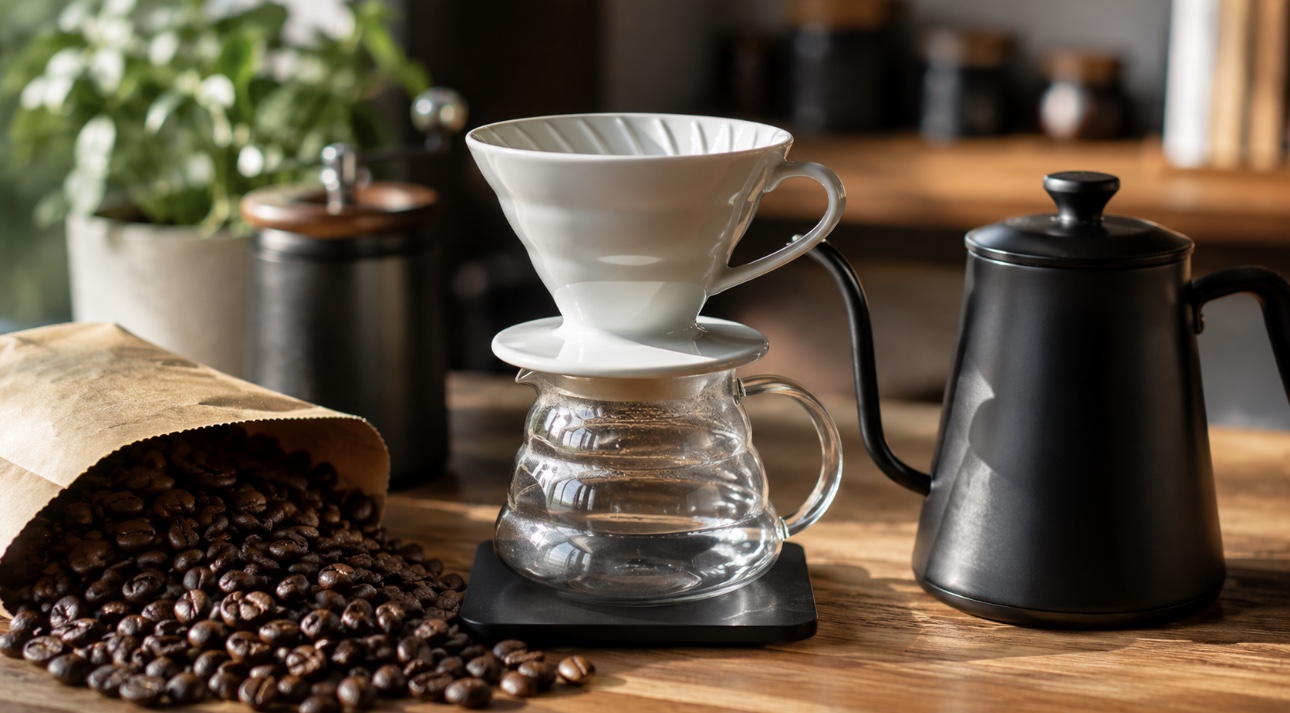
A gooseneck kettle gives better control over water flow, especially for pour-over coffee.
Controlled pouring helps distribute water evenly across the coffee grounds, which improves extraction and creates a more balanced cup.
Coffee Filters: Improve Cup Clarity
Coffee filters separate coffee grounds from brewed coffee and influence the final texture of your cup.
Paper filters are commonly used for pour-over methods because they create a cleaner and smoother coffee experience.
Coffee Server or Carafe: Easy Brewing and Serving
A coffee server or carafe helps collect and serve brewed coffee, especially when making pour-over coffee.
It keeps the brewing process organized and makes serving easier.
Coffee Bean Storage: Protect Freshness
Proper storage helps maintain the quality and freshness of coffee beans.
Store coffee beans in an airtight container away from:
• Heat
• Moisture
• Direct sunlight
• Air
• time
Fresh beans and proper storage help preserve the natural aroma and flavor of coffee.
Do Beginners Need Expensive Coffee Equipment?
Beginners do not need expensive equipment to start making good coffee.
Start with the basics:
* Fresh coffee beans
* A reliable grinder
*A simple brewing device
* A coffee scale
As your skills improve, you can slowly upgrade your equipment and explore more advanced brewing techniques.
Coffee Brewing Basics Before You Start
Before trying different coffee brewing methods, it is helpful to understand a few basic brewing principles. These small details can make a big difference in the flavor, balance, and consistency of your coffee.
Coffee-to-Water Ratio
The coffee-to-water ratio is the amount of coffee you use compared to the amount of water. Getting this balance right is one of the easiest ways to improve your coffee.
A good starting point for beginners is:
* 1:15 – Rich and full-bodied
* 1:16 – Balanced and well-rounded
* 1:17 – Light and smooth Once you find a ratio you enjoy, keep using it consistently before making small adjustments.
Grind Size Matters
The grind size should match your brewing method. If the grind is too fine, your coffee may taste bitter. If it is too coarse, your coffee may taste weak or sour.
As a general guide:
* Fine grind – Espresso
* Medium grind – V60 and other pour-over methods
* Coarse grind – French Press
Using the correct grind size helps produce a cleaner and more balanced cup.
Water Quality and Temperature
Since coffee is made mostly of water, water quality has a direct impact on flavor.
Use clean, fresh water whenever possible. For most brewing methods, a water temperature between 90–96°C (194–205°F) helps extract the coffee evenly without adding unwanted bitterness.
Coffee Dose and Consistency
Using the same coffee dose every time makes it easier to repeat a recipe and understand how small changes affect the taste.
Measuring both coffee and water with a scale helps you brew more consistently and improve your results over time.
Fresh Coffee Beans
Fresh coffee beans contain more aroma and flavor than old beans.
For the best results, grind your coffee just before brewing and store whole beans in an airtight container away from heat, moisture, and direct sunlight. These simple habits help preserve freshness and improve every cup.
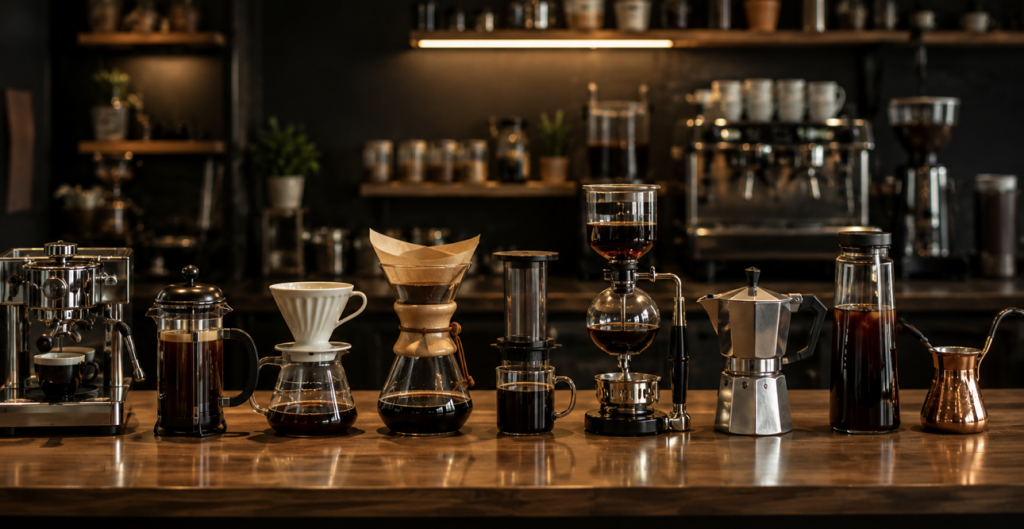
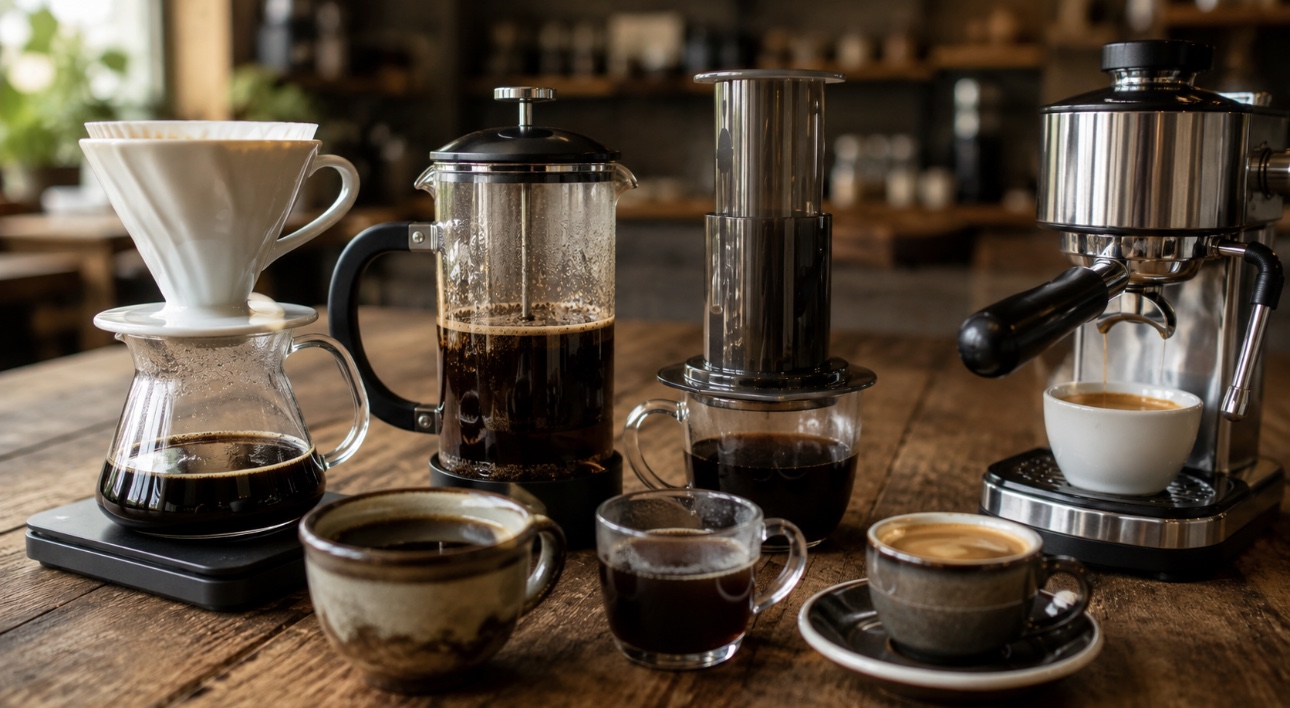
9 Easy Coffee Brewing Methods for Beginners
Learning different coffee brewing methods is one of the best ways to discover how brewing can change the flavor of your coffee. Each method offers a unique taste, body, and brewing experience.
The good news is that you do not need to master every method at once. Start with one brewing method, learn the basics, and build your confidence before trying another. With practice, you will better understand how grind size, brewing time, and pouring technique influence the final cup.
The following beginner-friendly brewing methods are widely used by home brewers, cafés, and professional baristas around the world.
V60 Pour Over Coffee
What Is V60 Pour Over Coffee?
V60 is one of the most popular coffee brewing methods for specialty coffee. Hot water is slowly poured over freshly ground coffee, allowing it to flow through a paper filter into a server or cup.
Flavor Profile V60 produces a clean, bright, and well-balanced cup that highlights the coffee’s natural flavors and aroma.
Best For
V60 is ideal for coffee lovers who enjoy a clean cup with noticeable fruit, floral, or sweet tasting notes.
Difficulty Level
Beginner to Intermediate
Although V60 is easy to learn, pouring steadily and using the right grind size will improve your results with practice.
Basic Brewing Guide
* Use a medium grind.
* Start with a 1:15 coffee-to-water ratio.
* Use water between 90–96°C (194–205°F).
* Pour slowly and evenly for a balanced extraction.
⸻ French Press Coffee
What Is French Press Coffee?
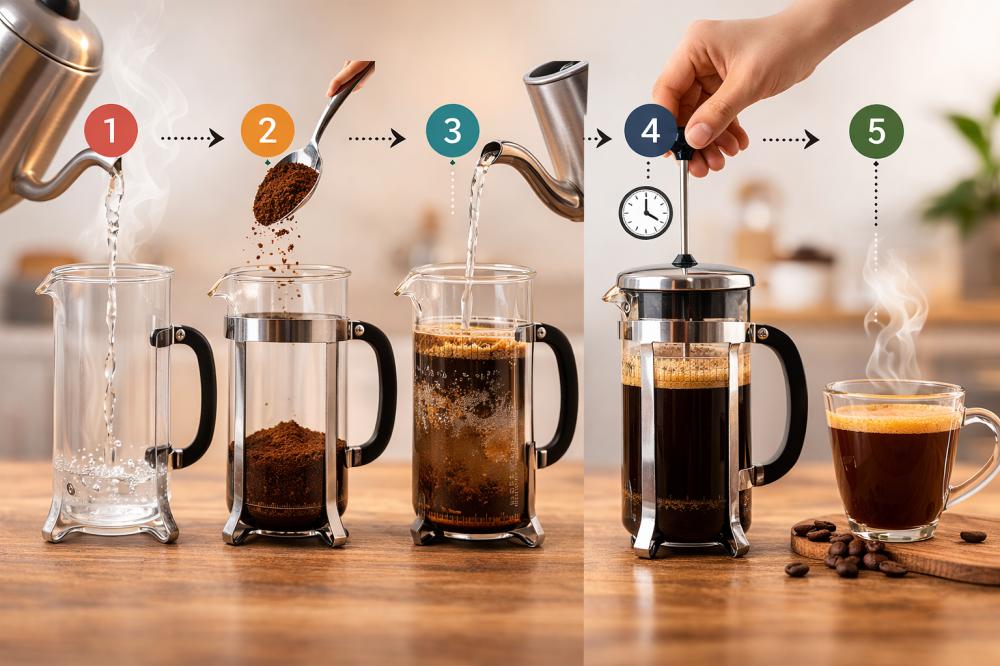
The French Press is a simple immersion brewing method where coffee grounds stay in hot water for several minutes before being separated with a metal plunger.
Flavor Profile
French Press creates a rich, full-bodied, and smooth cup with more natural coffee oils.
Best For
It is a great choice for people who enjoy a heavier body and bold coffee flavor.
Difficulty Level
Beginner
French Press is forgiving and easy to use, making it one of the best brewing methods for beginners.
Basic Brewing Guide
* Use a coarse grind.
* Start with a 1:15 coffee-to-water ratio.
* Brew for about 4 minutes.
* Press the plunger slowly before serving.
⸻ AeroPress Coffee
What Is AeroPress Coffee?
The AeroPress is a compact brewing device that uses gentle air pressure to brew coffee quickly. It is easy to use at home, in the office, or while traveling.
Flavor Profile AeroPress produces a smooth, clean, and balanced cup with low bitterness.
Best For
It is perfect for beginners, travelers, and anyone looking for a quick and versatile brewing method.
Difficulty Level
Beginner
The AeroPress is simple to learn and allows you to experiment with different recipes as your brewing skills improve.
Basic Brewing Guide
* Use a medium-fine grind.
* Start with a 1:15 to 1:16 coffee-to-water ratio.
* Brew for about 2–3 minutes.
* Press slowly until all the coffee is extracted.
Chemex Coffee
What Is Chemex Coffee?
The Chemex is a pour-over brewing method that uses thick paper filters to produce a clean and refined cup of coffee. It combines a simple brewing process with an elegant glass design.
Flavor Profile
Chemex creates a clean, smooth, and bright cup with a light body and excellent flavor clarity.
Best For
It is ideal for coffee lovers who enjoy a clean, delicate cup that highlights the coffee’s natural sweetness and aroma.
Difficulty Level
Beginner to Intermediate
The Chemex is easy to learn, and a slow, steady pour helps produce the best results.
Basic Brewing Guide
* Use a medium-coarse grind.
* Start with a 1:16 coffee-to-water ratio.
* Use water between 90–96°C (194–205°F).
* Pour slowly in small circles until brewing is complete.
⸻ Moka PotCoffee
What Is Moka Pot Coffee?
The Moka Pot is a stovetop coffee maker that uses steam pressure to brew a rich and concentrated cup of coffee. It is a popular choice for home brewing and works well when you want a stronger coffee without an espresso machine.
Flavor Profile
Moka Pot coffee is bold, rich, and full-bodied, with a stronger flavor than most manual brewing methods.
Best For
It is a great option for people who enjoy intense coffee or prepare milk-based drinks at home.
Difficulty Level
Beginner
Once you learn the correct heat level and grind size, the Moka Pot becomes simple and reliable to use.
Basic Brewing Guide
* Use a medium-fine grind.
* Fill the water chamber to the safety valve.
* Fill the coffee basket without pressing the grounds.
* Brew over medium heat until the coffee finishes flowing.
⸻ Cold Brew Coffee
What Is Cold Brew Coffee?
Cold Brew is made by steeping coffee grounds in cold water for several hours instead of brewing with hot water. The slow extraction creates a naturally smooth and refreshing coffee.
Flavor Profile
Cold Brew offers a smooth, sweet, and low-acidity cup with very little bitterness.
Best For
It is perfect for warm weather, iced coffee lovers, and anyone who prefers a mellow coffee with a smooth finish.
Difficulty Level
Beginner
Cold Brew is one of the easiest brewing methods because it requires minimal equipment and very little hands-on effort.
Basic Brewing Guide
* Use a coarse grind.
* Start with a 1:8 coffee-to-water ratio for concentrate.
* Steep for 12–24 hours in the refrigerator or a cool place.
* Filter the coffee before serving and dilute if needed.
Espresso
Coffee What Is Espresso Coffee?
Espresso is a concentrated coffee made by forcing hot water through finely ground coffee under high pressure.
It is the foundation of many popular café drinks, including cappuccino, latte, flat white, and Americano.
Unlike filter coffee, espresso requires careful control of:
* Grind size
* Coffee dose
* Water ratio
* Extraction time
to create a balanced and flavorful shot.
⸻ Flavor Profile
Espresso delivers a:
* Rich
* Bold
* Full-bodied
* Smooth
coffee experience with a creamy layer of crema on top.
Depending on the coffee beans and extraction quality, espresso can have flavors like:
* Chocolate
* Caramel
* Nutty notes
* Fruity or floral notes
⸻ Best For
Espresso is ideal for:
People who enjoy strong coffee
Home baristas who want café-style drinks
Anyone interested in making latte, cappuccino, or flat white
⸻ Difficulty Level
Intermediate
Espresso requires practice with:
* Dose
* Grind adjustment
* Yield
* Extraction time
However, learning the basics helps you create more consistent espresso shots.
⸻ Basic Brewing Guide
* Use a fine espresso grind size
* Start with a 1:2 brew ratio (Example: 18g coffee → 36g espresso)
* Aim for around 25–30 seconds extraction time ( my experience depend on coffee test and coffee beans)
* Adjust grind size based on taste and flow speed
* Look for a balanced shot with sweetness , rich Crema and a. smooth finish
⸻ Common Beginner Mistakes
Too coarse grind → Fast extraction, weak and sour taste
Too fine grind → Slow extraction, bitter taste
❌ Wrong dose or ratio → Unbalanced flavor
Siphon Coffee
What Is Siphon Coffee?
Siphon Coffee is a unique brewing method that uses heat, vapor pressure, and vacuum action to create a clean and flavorful cup.
It combines science and craftsmanship, making it one of the most visually impressive coffee brewing methods.
⸻ Flavor Profile
Siphon coffee produces a:
* Clean
* Smooth
* Aromatic
* Balanced
cup with excellent flavor clarity and a lighter body.
It allows delicate coffee flavors and aromas to stand out clearly.
⸻ Best For
Siphon coffee is ideal for:
Coffee enthusiasts who enjoy experimenting
People interested in specialty coffee experiences
Those who appreciate unique brewing techniques
⸻ Difficulty Level
Intermediate to Advanced
The brewing process requires more attention and practice, but mastering siphon brewing creates a unique and memorable coffee experience.
⸻ Basic Brewing Guide
* Use a medium grind size
* Keep water temperature around 90–96°C (194–205°F)
* Control heat carefully during brewing
* Stir gently for even extraction
* Allow coffee to return to the lower chamber before serving
⸻ Common Beginner Mistakes
Using the wrong grind size
Applying too much heat
Over-extracting the coffee
Turkish Coffee
What Is Turkish Coffee?
Turkish Coffee is one of the oldest traditional coffee brewing methods in the world.
It is prepared by simmering extra-finely ground coffee with water in a small pot called a cezve.
Unlike filtered coffee, the coffee grounds remain in the cup, creating a rich body and unique traditional experience.
⸻ Flavor Profile
Turkish coffee delivers a:
* Strong
* Rich
* Intense
coffee experience with a thick texture and bold character.
It can have deep notes of:
* Chocolate
* Spices
* Roasted flavors
⸻ Best For
Turkish coffee is perfect for:
Traditional coffee lovers
People who enjoy strong and bold flavor
s Those interested in cultural coffee experiences
⸻ Difficulty Level
Beginner to Intermediate
The method is simple, but controlling:
* Heat
* Foam
* Brewing time
requires practice.
⸻ Basic Brewing Guide
* Use an extra-fine grind size
* Add coffee and water into a cezve
* Heat slowly over low to medium heat
* Avoid aggressive boiling
* Allow coffee grounds to settle before drinking
⸻ Common Beginner Mistakes
Boiling too aggressively
Using incorrect grind size
Rushing the brewing process
Frequently Asked Questions (FAQ) —
1.What is the easiest way to learn how to brew coffee for beginners?
For beginners, methods like French Press, V60, and AeroPress are great choices because they help you understand the foundation of coffee brewing, including grind size, water temperature, coffee ratio, and brewing time.
A good barista tip is to start with one brewing method, repeat the same recipe, and improve one variable at a time. Consistency is the fastest way to improve your coffee skills.
⸻ 2. How much coffee should I use for one cup?
A good starting point is a 1:15 coffee-to-water ratio. This means using 1 gram of coffee for every 15 grams of water.
For example, 15 grams of coffee with 225 grams of water can create a balanced cup. Once you understand your preferred taste, you can adjust the ratio for a stronger or lighter brew.
⸻ 3. What grind size should I use for different coffee brewing methods?
Grind size is one of the most important factors when learning how to brew coffee because it controls how quickly water extracts flavor from coffee grounds.
* Espresso: Fine grind
* AeroPress: Fine to medium grind
* V60: Medium-fine grind
* French Press: Coarse grind
* Cold Brew: Coarse grind
If your coffee tastes too bitter, weak, or unbalanced, checking your grind size is usually the first step.
⸻ 4. What is the best water temperature for brewing coffee?
Most coffee brewing methods work well between 90°C to 96°C (194°F to 205°F).
The right water temperature helps extract balanced flavors from coffee beans. Water that is too hot can create bitterness, while cooler water may result in a weak or sour cup.
⸻ 5. Why does my coffee taste bitter or sour?
Coffee taste problems usually happen because of extraction issues.
* Bitter coffee: Often caused by over-extraction. This can happen when the grind is too fine, brewing time is too long, or water temperature is too high.
* Sour coffee: Often caused by under-extraction. This can happen when the grind is too coarse, brewing time is too short, or water temperature is too low.
A professional approach is to adjust only one variable at a time until you find the right balance.
Beginners can start with balanced coffee beans from origins like Brazil, Colombia, and Ethiopia.
Each origin provides a different flavor experience, helping you understand how coffee origin, processing, and roasting influence the final taste.
A barista recommendation: always start with fresh beans and learn how each coffee responds to different brewing methods.
⸻ 7. Can I make specialty coffee at home without expensive equipment?
Yes. Great coffee does not always require expensive equipment.
A quality grinder, fresh coffee beans, clean water, and correct brewing technique can help you make excellent coffee at home.
The most important equipment is not only your tools, but also your understanding of the brewing process.
⸻ 8. what is the best way to learn how to brew coffee like a barista ?
The best way to improve is through practice and consistency.
Focus on one change at a time:
* Grind size
* Coffee ratio
* Water temperature
* Brewing time
* Pouring technique
Just like a professional barista, small adjustments and regular practice will help you understand coffee better.
⸻ 9. How long does it take when learning how to brew coffee?
Brewing time depends on the method:
* Espresso: Around 25–35 seconds
* V60: Around 2.5–3.5minutes
* French Press: Around 4 minutes
* AeroPress: Around 1.5–3 minutes
* Cold Brew: 12-24 hours
Remember, good coffee is not only about speed. The goal is to create a balanced and enjoyable cup.
⸻ 10. What should beginners know about how to brew coffee?
When learning how to brew coffee, beginners should focus on four basics:
1. Use fresh coffee beans
2. Choose the correct grind size
3. Maintain the right coffee-to-water ratio
4. Control brewing time and water temperature
You do not need to master everything at once. Start with one method, practice regularly, and build your confidence step by step.
Conclusion
Learning how to brew coffee is a journey that grows with every cup you make. Whether you prefer a V60, French Press, AeroPress, Espresso, Chemex, Moka Pot, Cold Brew, Siphon, or Turkish Coffee, each brewing method offers a unique way to explore the flavors and aromas of coffee.
Great coffee is not about owning the most expensive equipment. It comes from understanding the fundamentals—using fresh coffee beans, choosing the right grind size, maintaining the correct coffee-to-water ratio, controlling water temperature, and brewing for the right amount of time. These small details work together to create a consistently delicious cup.
If you’re just starting, focus on mastering one brewing method before moving on to another. Practice the same recipe, taste your results, and make one small adjustment at a time. This simple approach is how professional baristas build confidence, improve consistency, and develop their brewing skills.
As a barista, one of the most valuable lessons is that great coffee is built through consistency, not guesswork. Don’t worry if your first few cups aren’t perfect—every experienced barista started as a beginner, and every brew is an opportunity to learn something new.
Most importantly, enjoy the process. Brewing coffee is not just about making a drink; it’s about understanding the craft, discovering new flavors, and creating moments to appreciate every cup. With patience, curiosity, and regular practice, you’ll not only learn how to brew coffee but also gain the confidence to brew great coffee consistently wherever you are.



 People who enjoy strong coffee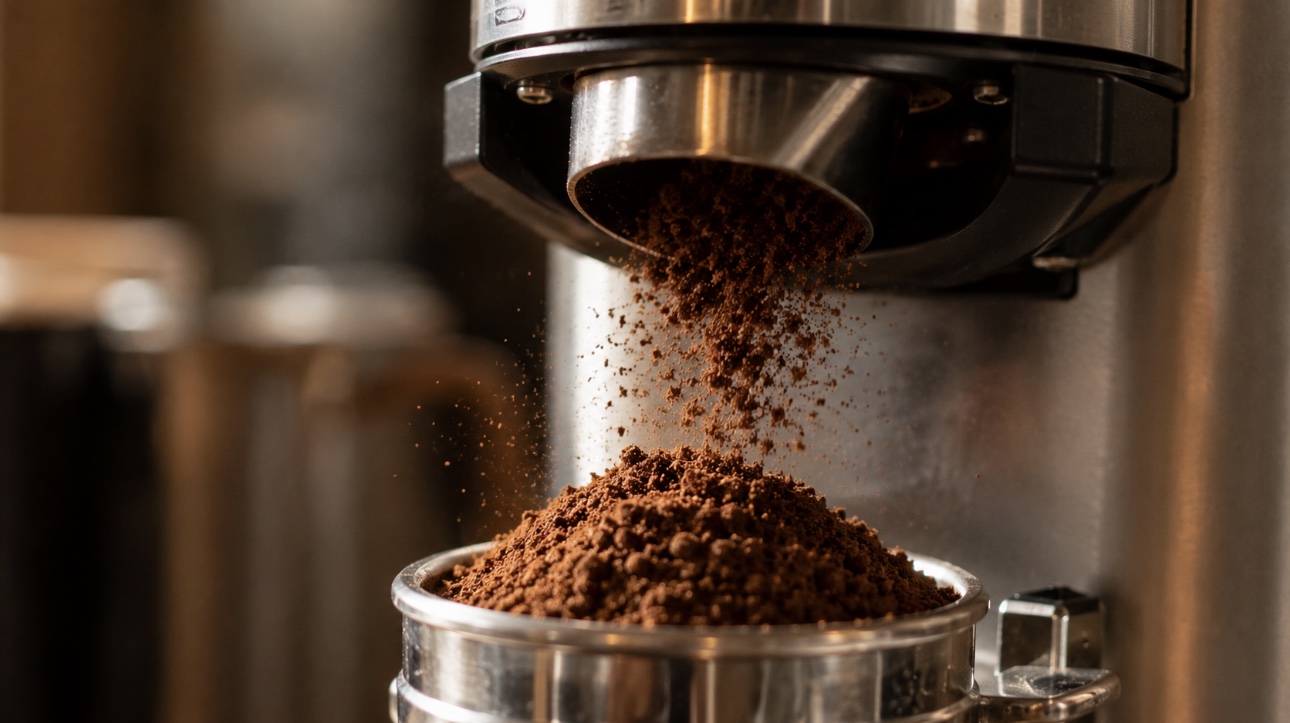
 Too coarse grind → Fast extraction, weak and sour taste